
SEAGULL HEALTH
Your health,We care!
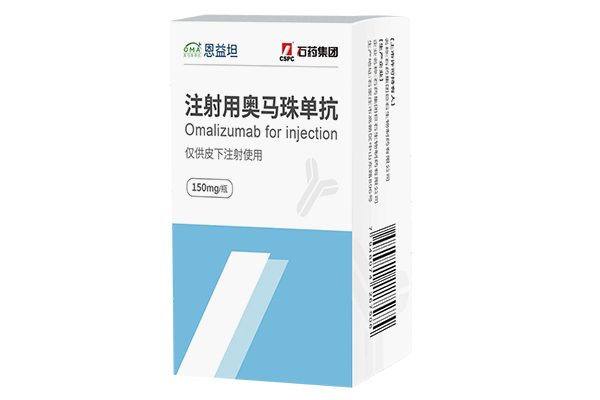
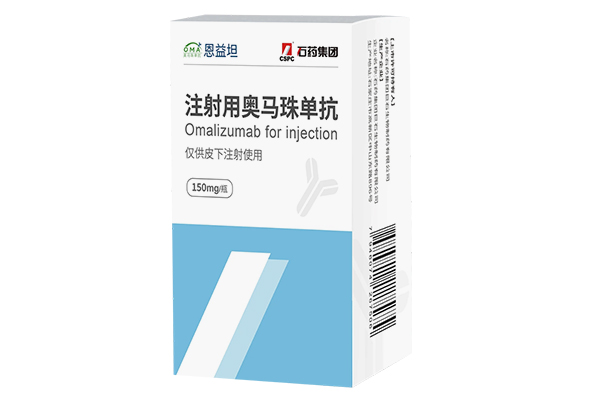
Omalizumab for Injection has definite efficacy and good safety in the treatment of moderate to severe allergic asthma and chronic spontaneous urticaria, reshaping the treatment paradigm for allergic diseases.

 AuthenticGuaranteeFast DeliveryPrivacy
 As a representative drug in the field of targeted therapy, Omalizumab for Injection has transformed the traditional treatment paradigm for allergic diseases through its precise mechanism of action and proven clinical efficacy.
Omalizumab for Injection is indicated for the treatment of chronic spontaneous urticaria in adults and adolescents (aged 12 years and above) who still have symptoms despite treatment with H1 antihistamines.
This product should be prescribed and administered by physicians experienced in the diagnosis and treatment of chronic spontaneous urticaria.
Omalizumab is administered subcutaneously at a dose of 150 mg or 300 mg every 4 weeks.
The optimal duration of treatment for CSU has not been established. Reassess the need for continued treatment on a regular basis.
For subcutaneous injection only. Intravenous or intramuscular administration is not permitted.
Subcutaneous injection should be given in the deltoid region of the upper arm. If injection in the deltoid region is not feasible for certain reasons, the injection may also be administered in the thigh.
Experience with self-injection by patients is limited. Therefore, this product is for administration only by healthcare professionals.
This product is contraindicated in patients with hypersensitivity to the active ingredient of omalizumab or any of its excipients.
Infections and Infestations: Upper respiratory tract infection, urinary tract infection.
Nervous System Disorders: Sinus headache.
Musculoskeletal and Connective Tissue Disorders: Myalgia, limb pain, musculoskeletal pain.
General Disorders and Administration Site Conditions: Pyrexia.
Administration Site Reactions: Compared with placebo-treated patients, more omalizumab-treated patients experienced administration site reactions during the study. These reactions include: Swelling, erythema, pain, bruising, pruritus, hemorrhage and urticaria.
Women of Childbearing Potential
No special recommendations are provided for women of childbearing potential.
Pregnancy
Based on pregnancy registry studies and post-marketing spontaneous reports, a sufficient number of data from pregnant women indicate no malformations or fetal/neonatal toxicity. A prospective pregnancy registry study (EXPECT) involving 250 pregnant women with asthma exposed to omalizumab showed that the prevalence of major congenital malformations was similar between the EXPECT group and disease-matched patients (moderate to severe asthma) (8.1% vs. 8.9%). However, the interpretation of these data may be affected due to methodological limitations of the study, including small sample size and non-randomized design.
Omalizumab can cross the placental barrier. Nevertheless, animal studies have demonstrated that omalizumab exerts no direct or indirect adverse effects on reproductive system toxicity.
In non-human primates, supra-clinical doses of omalizumab are associated with age-dependent thrombocytopenia, with juvenile animals showing higher relative sensitivity.
This product may be considered for use during pregnancy if clinically necessary. For pregnant women who need to use this product, the potential benefits to the mother and the potential risks to the fetus must be comprehensively weighed.
Lactation
Immunoglobulin G (IgGs) is present in human milk; therefore, omalizumab is expected to be present in human milk. Data from non-human primates have shown that omalizumab can be secreted into milk.
In the EXPECT study, data from 154 infants exposed to omalizumab during pregnancy and through breastfeeding demonstrated no adverse effects on breastfed infants. However, the interpretation of these data may be affected due to methodological limitations of the study, including small sample size and non-randomized design.
Regarding the use of this product in lactating women, it should be noted that oral intake of immunoglobulin G undergoes proteolysis in the intestinal tract, resulting in poor bioavailability. No effects on breastfed neonates/infants are anticipated. Therefore, this product may be considered for use during lactation if clinically necessary. For lactating women who need to use this product, the potential benefits to the mother and the potential risks to the neonate must be comprehensively weighed.
Fertility
No data on the effects of this product on human fertility are available. In specially designed non-clinical fertility studies (including mating studies) in non-human primates, repeated subcutaneous administration of omalizumab at doses up to 75 mg/kg/week showed no impairment of fertility in male and female animals. In addition, no genotoxic effects were observed in various non-clinical genotoxicity studies.
For chronic spontaneous urticaria, the safety and efficacy of this product in pediatric patients under 12 years of age have not been established.
Data on the use of this product in geriatric patients (aged 65 years and above) are limited, but there is no evidence indicating that geriatric patients require a different dosage from adult patients under 65 years of age.
For more detailed drug information, please consult the official package leaflet.
If any issues arise, please contact us immediately.
Email:haiousales@gmail.com
Copyright 2024 @ haiouhealth.com All right reserved SEAGULL HEALTH


